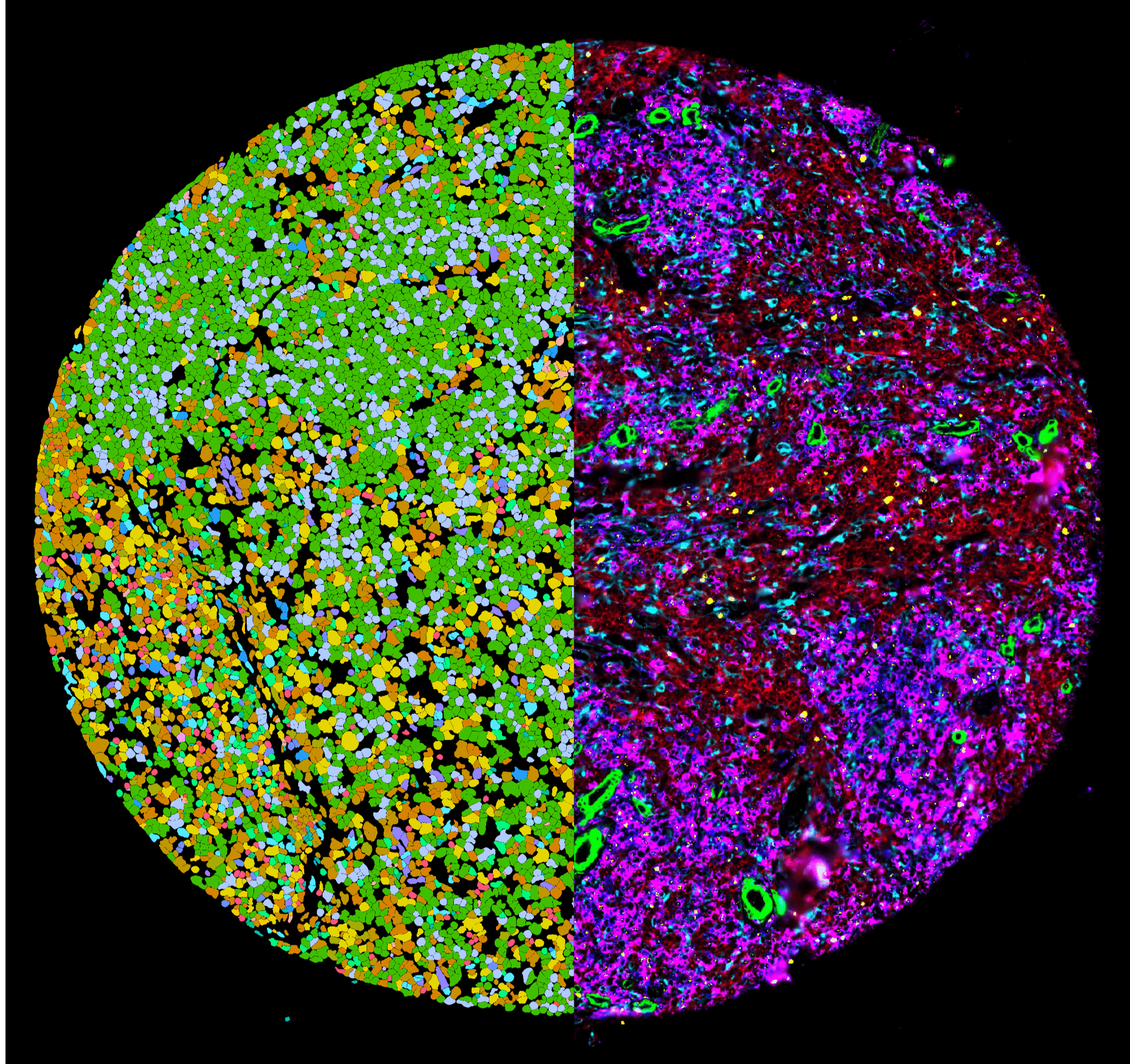
INTeRCePT 3.0 develops new approaches for dynamic precision oncology in lymphoma care. The project aims to predict treatment responses at an early stage and to individualize therapies by systematically analyzing tumor and immune changes throughout the entire course of disease.
Within the Zurich Precision Oncology Consortium INTeRCePT, clinicians and researchers collaborate across disciplines to combine longitudinal and multimodal data from tumor and blood samples with advanced computational analyses. The goal is to identify insufficient treatment responses early, guide therapies more precisely, and ultimately improve clinical outcomes.
In contrast to conventional precision oncology approaches, which are typically based on biomarkers assessed before treatment initiation, INTeRCePT 3.0 follows a dynamic strategy: biological changes are captured early during therapy and integrated into individualized risk models. This enables adaptive treatment guidance and opens new possibilities for personalized cancer therapies.
Research and Technology Objectives
Spatial and Molecular Characterization of Lymphomas
INTeRCePT 3.0 investigates the molecular composition and spatial organization of lymphomas using high-resolution single-cell and multi-omics technologies. These approaches enable detailed analysis of tumor tissue at single-cell resolution and capture both the architecture of the tumor microenvironment and the interactions between tumor cells and the immune system. Integrated analyses provide the foundation for precisely understanding tumor-biological mechanisms and functional relationships, and for translating these insights into predictive models.
Longitudinal Analysis of Tumor and Immune Dynamics
More than 1,000 tumor and blood samples are being analyzed longitudinally — collected before treatment and especially during the early phases of therapy. These repeated measurements allow systematic tracking of changes in tumor and immune profiles over time and enable the identification of early indicators of insufficient treatment response.
In addition, liquid biopsies are used to analyze circulating tumor DNA (ctDNA), enabling continuous and minimally invasive monitoring of genetic tumor alterations. This approach allows early detection of emerging resistance mechanisms and supports timely adaptation of treatment strategies.
Analysis of Immune Responses During Therapy
Another major focus is high-dimensional immune profiling, which enables detailed investigation of the composition and function of the immune system throughout treatment. Changes in different immune cell populations and their activation states are assessed longitudinally and correlated with clinical outcomes. The goal is to better understand immune responses to different therapies and to integrate immunological parameters into the prediction of treatment success.
Development of Predictive Models and Dynamic Risk Prediction
To integrate the various molecular, cellular, and clinical data types, quantitative models and machine learning approaches are employed. These methods enable systematic analysis of complex relationships between tumor biology, immune responses, and treatment outcomes.
Based on these analyses, INTeRCePT 3.0 develops individualized models for dynamic risk prediction designed to support more precise and adaptive treatment strategies. The resulting models will subsequently be validated in a prospective clinical study to demonstrate the feasibility of dynamic precision oncology approaches in lymphoma care.
“We aim to predict the course of lymphoma patients as early as possible, using high-resolution analyses before and immediately after treatment. We hope these efforts will represent an important step toward truly personalized cancer therapy.”
Prof. Dr. med. Thorsten Zenz - Department of Medical Oncology and Hematology, USZ

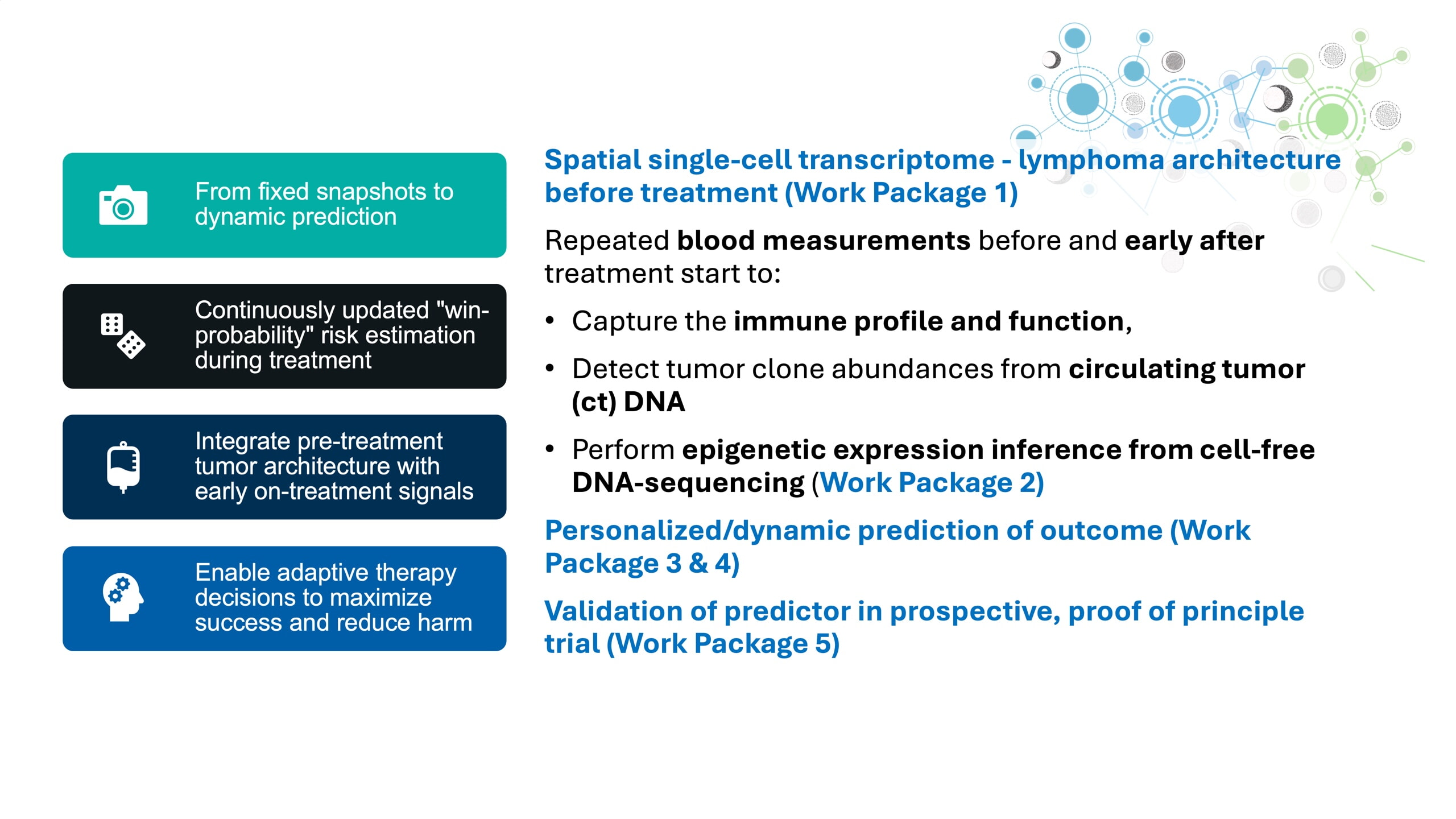
INTeRCePT3.0: Graphical Abstract
Principal Investigator and Project Team

Prof. Dr. med. Thorsten Zenz, University Hospital Zurich, Department of Medical Oncology and Hematology, thorsten.zenz@usz.ch

Prof. Dr. Burkhard Becher, University of Zurich, Institute of Experimental Immunology, becher@immunology.uzh.ch

Prof. Dr. Niko Beerenwinkel, ETH Zurich, Institute for Biomedical Engineering, niko.beerenwinkel@bsse.ethz.ch

Prof. Dr. Valentina Boeva, ETH Zurich, Department of Computer Science, valentina.boeva@inf.ethz.ch

Dr. med. Marco M Bühler, University Hospital Zurich, Department of Pathology and Molecular Pathology, marcomatteo.buehler@usz.ch

Prof. Dr. Wolfgang Huber, EMBL, wolfgang.huber@embl.org

Prof. Dr. Andreas Moor, ETH Zurich, Department of Biosystems Science and Engineering , andreas.moor@bsse.ethz.ch

Prof. Dr. Virginie Uhlmann, University of Zurich, Department of Molecular Life Sciences, virginie.uhlmann@mls.uzh.ch
Funding Period
1.1.2026-31.12.2030
Funding Volume
CHF 4.050.000
Funded by
University Medicine Zurich (UMZH)
Comprehensive Cancer Center Zurich (CCCZ)
The LOOP Zurich
Tumor Profiler Center
Further projects
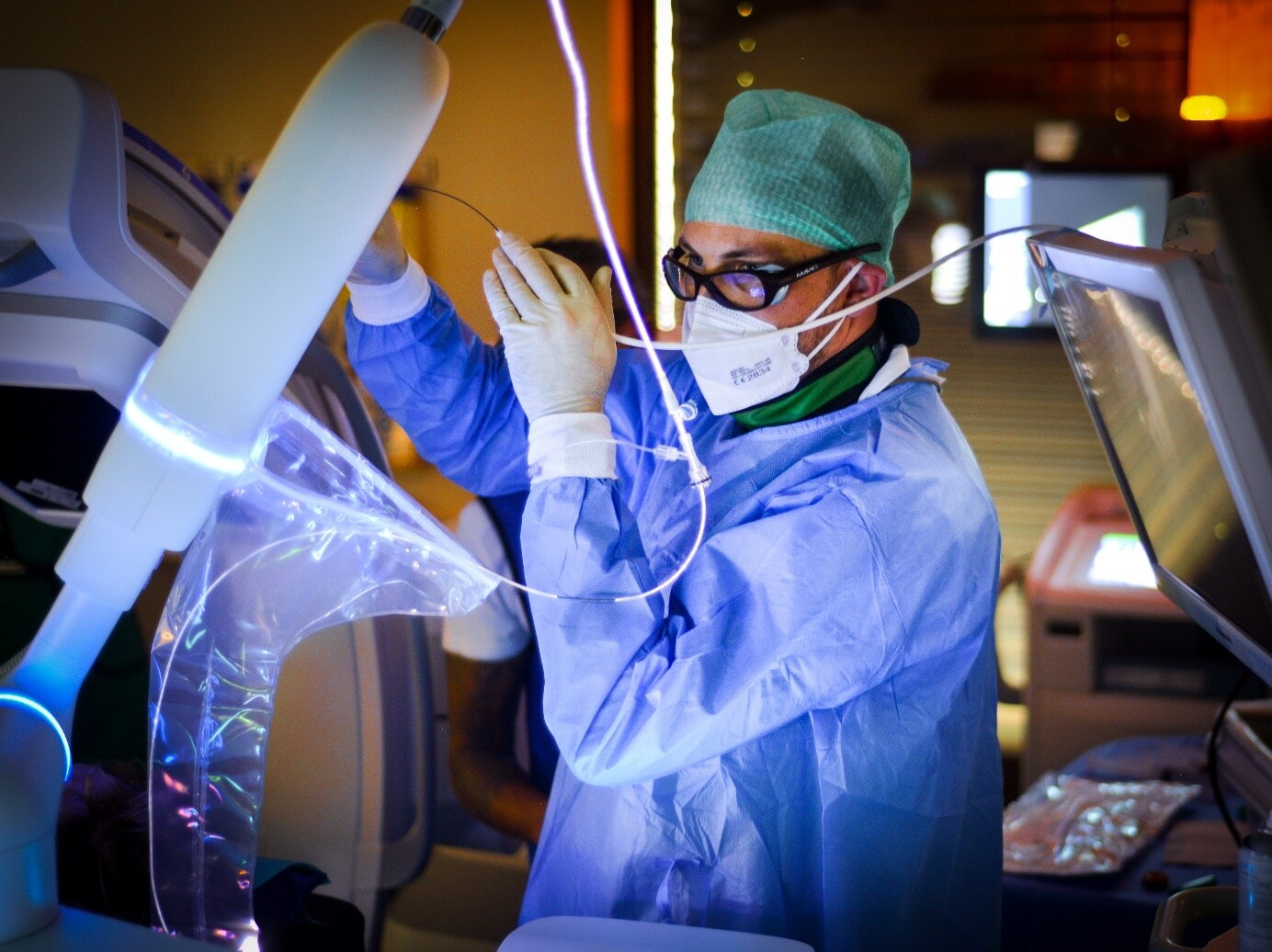
CCCZ Investigator Initiated Trial
BRAVE-Lung
Robotic-assisted Bronchoscopic Radiofrequency Ablation for Very-Early Lung Cancer -A novel Cancer Therapy
CCCZ Lighthouse Projects
Interdisciplinary research teams transfer findings from basic research into clinical application and develop new treatment concepts for cancer.