
Research on brain and leptomeningeal metastases is gaining importance as improved cancer therapies outside the CNS lead to longer patient survival. The project investigates the molecular and immunological characteristics of brain metastases to identify new, targeted treatment options. Two clinical trials in Zurich focus on immunotherapy and radiotherapy for brain and leptomeningeal metastases from lung cancer and melanoma.
Keywords
Brain, Cancer, Metastasis
Project Overview
Brain and leptomeningeal metastases are an emerging area of clinical and experimental research in oncology. This is due to increasingly effective therapies of solid tumors at non-central nervous system (CNS) sites and thus longer overall survival. Brain metastases may affect up to 30%, and leptomeningeal metastases up to 10%, of patients with metastatic cancer. They are a major cause of morbidity and mortality and most common in melanoma, lung, breast and kidney cancer and develop in a distinct pattern by primary tumor, e.g., much earlier in lung cancer than in other entities. Treatment includes neurosurgery, radiotherapy, and systemic and rarely intrathecal pharmacotherapy.
CNS metastases represent a challenge in diagnosis and treatment. Many clinical trials exclude patients with brain metastases and dedicated brain metastases trials are rare, systematically depriving brain metastasis patients from progress in clinical oncology, despite their poor prognosis. Moreover, with the increasing use of stereotactic radiotherapy and immunotherapy in patients with brain metastasis, assessment of response or progression based on neuroimaging has become a major challenge, but efforts at standardization of imaging for patients with brain metastases are under way.
The branched evolution of cancer has become a dominant concept in oncology with a particular focus on brain metastasis. It proposes that cancer cells seeding in different organs do not evolve randomly, but are shaped or selected for by interactions with their microenvironment (the metastatic niche). This concept has triggered studies comparing various features of brain metastases with primary tumors or metastases outside the brain preferentially in patients with lung cancer, breast cancer, and melanoma. Most studies focused on selected genes characteristic for subtypes of these tumors, e.g., hormone receptor status in breast cancer. Unbiased approaches have indicated that the changes found in brain metastases may be rather heterogeneous. These considerations support the major prediction of this project that tissue acquisition from brain metastases followed by deep molecular profiling may disclose vulnerabilities specific to brain metastases that may be amenable to targeted interventions. Moreover, decipherung the host response in the brain as opposed to metastases outside the CNS may disclose new avenues on how to best treat CNS metastasis.
The CNS Metastasis research efforts of the Comprehensive Cancer Center Zurich currently receives support from the Sophien Foundation, the Foundation for Applied Cancer Research (SAKF), the Promedica Foundation and the USZ Foundation.
Clinical Trials
Two clinical trials are now open in Zurich in the field of CNS metastasis:
ETOP 19-21 USZ-STRIKE
Immunotherapy or targeted therapy with or without stereotactic radiosurgery for patients with brain metastases from melanoma or non-small cell lung cancer
This trial is conducted under the sponsorship of ETOP and examines whether patients with newly diagnosed brain metastasis from non-small cell lung cancer or melanoma, who are candidates for systemic treatment, should receive radiosurgery upfront or at further progression. The trial was made possible by the USZ foundation.
IT-IO
Intrathecal administration of anti-PD1/anti-CTLA-4 in combination with systemic combination of anti-PD1/anti-CTLA-4 in patients with NSCLC without oncogenic driver mutation or melanoma and newly diagnosed leptomeningeal metastasis: a multicentric phase I study
This trial is a phase I trial conducted at several sites in Switzerland to explore the safety and preliminary activity of intrathecal double immune checkpoint inhibition in patients with newly diagnosed brain metastasis from non-small cell lung cancer or melanoma.
“To address the challenges of one of the most important important transversal research areas in Oncology, the Comprehensive Cancer Center in 2018 defined CNS Metastasis as the first top priority project for the Zurich network of cancer research. It builds on the excellence and cooperative efforts of multiple clinical and experimental research groups at the Zurich University Hospitals, the University of Zurich, and the Federal Institute of Technology (ETH).”
Emilie Le Rhun - Department of Medical Oncology and Hematology, University Hospital Zurich
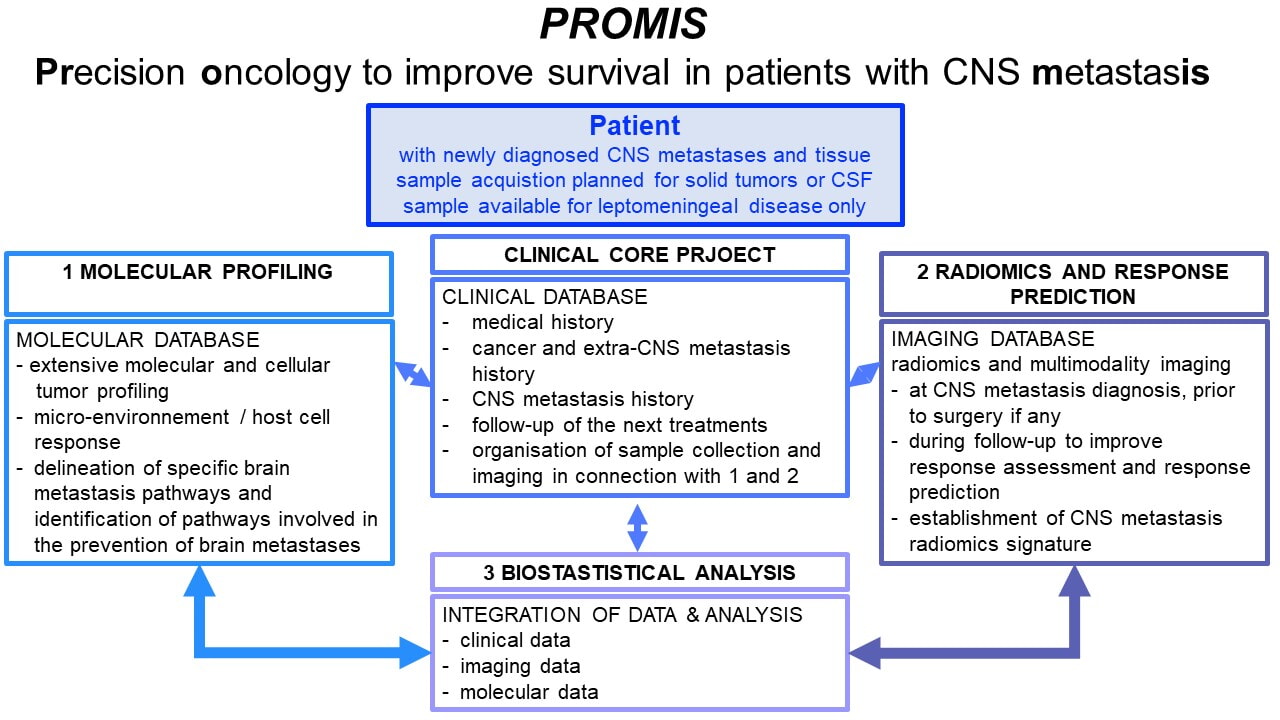
Collaboration and personalized medicine to improve quality of care and access to innovative research
Principal investigators and cooperating departments

Emilie Le Rhun, Principal investigator, University Hospital Zurich, Department of Neurology, Emilie.Lerhun@usz.ch

Prof. Dr. med. Michael Weller, Klinikdirektor, University Hospital Zurich, Department of Neurology, michael.weller@usz.ch

Nicolaus Andratschke, University Hospital Zurich, Department of Radiation Oncology, Nicolaus.Andratschke@usz.ch

Prof. Dr. Burkhard Becher, University of Zurich, Institute of Experimental Immunology, becher@immunology.uzh.ch

Prof. Dr. med. Matthias Guckenberger, Director CCCZ Outreach and Education, University Hospital Zurich, Department of Radiation Oncology, matthias.guckenberger@usz.ch

Prof. Dr. Michael Krauthammer, Director CCCZ Bioinformatics, University of Zurich, Department of Quantitative Biomedicine, michael.krauthammer@uzh.ch
Prof. Dr. med. Holger Moch, Director CCCZ Translational Cancer Research Programs, University Hospital Zurich, Department of Pathology and Molecular Pathology, holger.moch@usz.ch

Prof. Dr. med. Luca Regli, Klinikdirektor, University Hospital Zurich, Department of Neurosurgery, luca.regli@usz.ch

Prof. Dr. med. Isabelle Schmitt-Opitz, University Hospital Zurich, Department of Thoracic Surgery, isabelle.schmitt-opitz@usz.ch

PD Dr. med. Dr. sc. nat. Tobias Weiss, Leitender Oberarzt, University Hospital Zurich, Department of Neurology, tobias.weiss@usz.ch
Prof. Dr. med. Andreas Wicki, Director CCCZ Clinical Program, University Hospital Zurich, Department of Medical Oncology and Hematology, andreas.wicki@usz.ch
Prof. Dr. med. Andreas Wicki
Director CCCZ Clinical Program
Weitere Funktionen am USZ
- Director CCCZ Clinical Program Comprehensive Cancer Center Zürich
Spezialgebiete
- Molekulare Onkologie
- Gastrointestinale Onkologie
- Neuroendokrine Tumoren
Abteilungen
Funding Period: 1.7.2022-31.12.2025
Funding Volume CHF 150.000
Funded by University Medicine Zurich (UMZH), Comprehensive Cancer Center Zurich (CCCZ)
Further projects
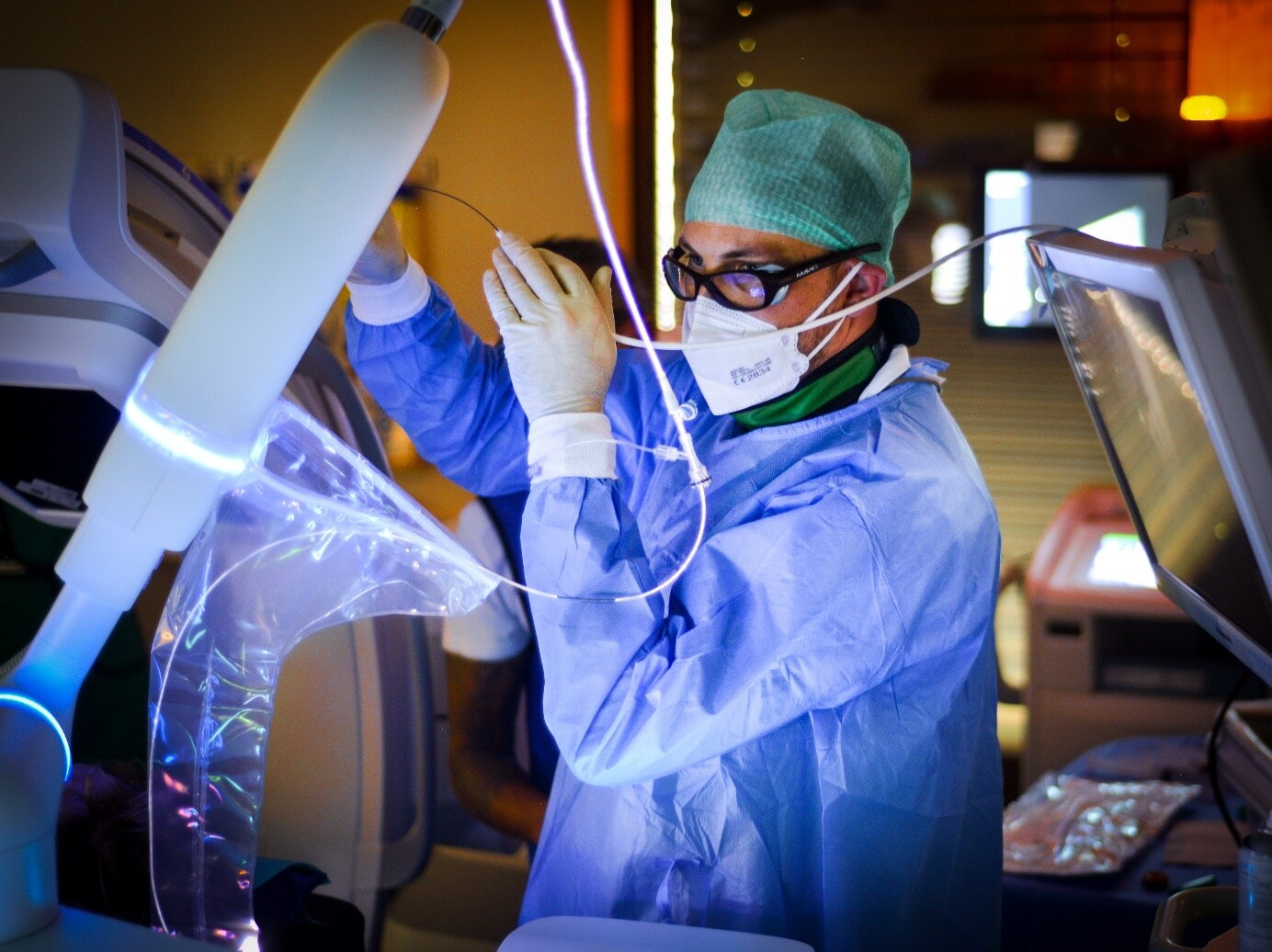
CCCZ Investigator Initiated Trial
BRAVE-Lung
Robotic-assisted Bronchoscopic Radiofrequency Ablation for Very-Early Lung Cancer -A novel Cancer Therapy
CCCZ Lighthouse Projects
Interdisciplinary research teams transfer findings from basic research into clinical application and develop new treatment concepts for cancer.